




Remote was founded in 2019 by Job van der Voort and Marcelo Lebre on one structural bet: own every legal entity rather than rent compliance from local partners. EOR employment runs through roughly 80 to 90 owned entities, while contractor payments reach 180+ countries.
The product line spans Employer of Record, Global Payroll, Contractor Management, Contractor of Record, US PEO, equity administration and a free HRIS.
Remote becomes the legal employer of your hire. It issues the local contract, registers the employee with tax and social security authorities, runs payroll in local currency, files statutory contributions and administers mandated benefits. You keep the work and the reporting line.
Onboarding in an established market completes in a few business days once documents are returned. IP Guard assigns invention and copyright rights at contract signature rather than through a separate deed, which is the reason most software companies name for choosing Remote when converting engineering contractors.
Pricing is published in full on the Remote pricing page. EOR costs $599 per employee per month on annual billing or $699 billed monthly. Payroll is $29 per employee per month, contractor management $29 per contractor, Contractor Management Plus $99, and Contractor of Record starts at $325.
Recruit begins at $199 per month. No platform fee, no setup fee, no minimum headcount, no working capital deposit. The caveat buyers miss: the FX margin on every cross-border payroll run is unpublished, and Global Payroll carries a quote-only implementation fee. Get both in writing before you compare total cost against anyone else.
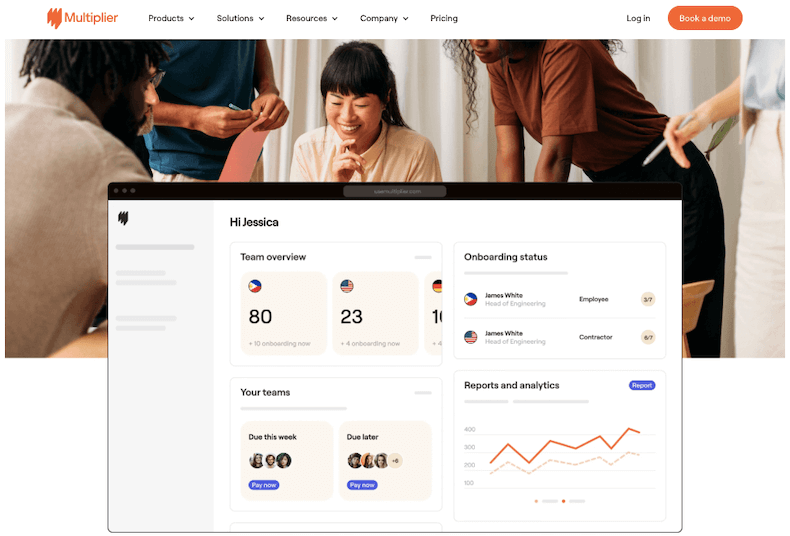
On price, Remote sits level with Deel at $599 and above Multiplier at $400 flat. Oyster HR and Pebl advertise broader country lists, and Rippling bundles EOR into a wider HR, IT and finance platform at a lower entry price. The entity model is what separates Remote from all five.
Most providers quoting 150+ countries deliver the majority through partner networks they do not name. The zero-deposit policy is the second gap, since Deel quotes a country-by-country security deposit that ties up cash before the first payroll runs.
Remote: Key Facts
A quick look at Remote’s company background, funding, and operational scale.
Founded
2019
Headquarters
San Francisco, California, US
Co-Founders / CEO
Job van der Voort (CEO), Marcelo Lebre (President)
Employees
1,000 to 5,000
Total Funding
$495M across four rounds
Valuation
$3B at Series C, April 2022
Annual Revenue
Not publicly disclosed
Customers
Not publicly disclosed
Core Services
EOR, Global Payroll, Contractor Management, Contractor of Record, US PEO, Equity, HRIS
Support Types
Live chat, email ticketing, help centre, CSM on larger accounts
Remote EOR Review: Editor’s Verdict

Remote is the cleanest owned-entity EOR on the market, and the price reflects that. At $599 per employee per month on annual billing, $699 month to month, it sits level with Deel and roughly $199 above Multiplier. The fit is companies hiring five to fifty people across Europe and APAC who want one legal chain instead of a partner roster.
Remote markets 180+ countries, but EOR employment runs through roughly 80 to 90 owned entities. The remainder is contractor reach, and the two are not interchangeable at procurement stage.
No setup fee, no minimum headcount, no working capital deposit. That combination is unusual in the $599 tier and removes a real cash-flow obstacle. Across 3,723 G2 reviews and 98 on Capterra, buyers rate the interface and onboarding speed highly, and software companies converting contractors cite IP Guard and equity handling as the reason they chose Remote.
Before signing, confirm your hiring country runs through a Remote-owned entity rather than a partner. Get the FX margin in writing, because Remote does not publish it. Global Payroll carries an implementation fee that is quote-only. Offboarding quality in Italy, Norway and Portugal draws repeat criticism from long-term customers.
Editorial Score Breakdown
Remote Pros & Cons 2026
Remote handles standard hires well. Most of the complaints on public review platforms start once a case falls outside the usual path, which is the part worth reading before you sign.
Strengths
Owns every entity it hires through
There is no partner sitting between your contract and the legal employer. If something goes wrong in month eight, you are dealing with the same company that signed the employee, not a local firm you never met.
No deposit, no setup fee
Deel asks for a security deposit that varies by country. Remote asks for nothing upfront and sets no minimum headcount.
IP assignment sits in the contract
Invention and copyright rights transfer at signature instead of through a separate deed you chase later. For anyone converting engineering contractors, this is usually the reason Remote wins the shortlist.
You can budget without a sales call
Ten plan rates are published, from $29 contractor management up to $699 monthly EOR. Rare enough in this category to count as a real advantage.
Admins pick it up without training
Ease of use is the highest-scoring dimension across every public review platform, and finance or ops staff outside HR tend to manage it fine on their own.
HRIS costs nothing extra
Time off, expenses, documents and org data come bundled. Under roughly 100 people that covers the whole job.
Areas to Watch
The country count mixes two products
180+ is contractor reach. EOR runs through a much shorter list of owned entities, and nothing on the pricing page tells you which is which. Check your target market before you assume it is covered.
Tier-one support answers from a script
Customers two years in describe first replies that miss the point of a cross-border question entirely. Escalate and the answers improve, but you have to know to escalate.
The FX margin is not published
On any real payroll volume it costs more than the management fee. Ask for the rate in writing.
Termination handling varies by market
Italy, Norway and Portugal get named by longer-tenure customers describing exits that went badly. Worth raising in the sales conversation if you hire there.
Payroll reporting is thin
No live cost dashboard, no variance detection, no drilling down by country. Finance teams past 15 markets end up building the analysis in a spreadsheet or moving to Papaya Global.
Global Payroll needs a quote
The $29 headline leaves out a one-time implementation charge and a recurring delivery fee, neither of them published, so you cannot compare it against Deel or Papaya on paper.
Remote Top Features
Two things set Remote apart from the rest of the $599 tier: it owns the entity behind every EOR hire, and IP assignment happens inside the employment contract rather than after it. The rest of the feature set is solid without being unusual.
Owned Entity Employment.
DifferentiatorRemote employs your hire through a legal entity it owns outright, in roughly 80 to 90 countries. Most providers advertising 150+ markets deliver the majority through partner firms they will not name until you ask directly. The practical difference shows up at termination, when liability and the negotiation both sit with the company you signed the contract with.
Remote IP Guard.
DifferentiatorInvention and copyright rights transfer to your company the moment the employment contract goes live. Competitors typically handle this through a separate assignment deed signed after onboarding, which leaves a gap and a document to chase. For anyone converting engineering or design contractors, this closes the exposure that made the conversion necessary.
Contractor of Record.
DifferentiatorStarting at $325 per contractor per month, Remote takes on the misclassification liability instead of leaving it with you. Standard contractor management at $29 does not do this, and the difference matters in markets where authorities reclassify aggressively. Use it for long-running contractors you cannot yet convert to employment.
Local Payroll and Tax Filing.
CorePayroll runs in local currency with statutory contributions calculated, withheld and filed by Remote. Payslips and tax documents land in the employee’s own account rather than an HR inbox.
Compliant Contract Generation.
CoreYou enter salary, title and start date, and Remote produces a contract drafted to local employment law. Country-specific clauses like probation limits and notice periods come pre-set rather than left for you to verify.
Statutory and Supplemental Benefits.
CoreMandated benefits are included in the base fee. Supplemental packages such as private health cover are priced separately by country and quoted on request.
Free HRIS.
CoreTime off, expenses, documents and org structure come bundled at no cost, covering employees hired through Remote and those on your own entities. For teams under about 100 people it removes the need for a separate system.
Global Equity Administration.
Add-onStock option grants and vesting are handled across borders with local tax treatment applied, priced from $39 per month. Coverage is limited to Delaware C-Corps, so check your structure qualifies before counting on it.
Visa and Immigration Support.
Add-onAvailable in around 20 countries and quoted per case, with costs running from roughly $50 to well over $2,000 depending on complexity. Timelines depend on the destination authority, not on Remote.
Global Employee API.
CoreRemote exposes its employment infrastructure through an API, which lets HR and payroll vendors embed hiring and payroll into their own products. Useful if you are building internal tooling rather than working from the dashboard.
Is Remote the Right EOR for You?
Remote suits buyers who care more about who legally employs their people than about the monthly rate. If price is the deciding factor, the answer below is usually someone else.
Best For
- Software companies converting engineering contractors who need IP assignment closed at signature
- Teams hiring five to fifty people concentrated in Europe and APAC, where Remote’s owned entities are densest
- Finance leads who need a budget number today without sitting through a sales cycle
- Startups that cannot tie up working capital in a country-by-country security deposit
- HR teams of one or two with no appetite for training people on a complex admin interface
- Companies running a mix of employees and contractors that want both on one invoice
Skip If
- Your hiring is in markets Remote covers only for contractors, not EOR employment
- Budget is the deciding factor, since Multiplier is $199 cheaper per head and RemoFirst cheaper again
- You need live payroll cost dashboards and cross-country variance analysis, which points to Papaya Global
- You want EOR bundled with device management and app provisioning, which is Rippling’s territory
- Your procurement team requires a decade-plus compliance audit history, where Pebl and G-P are stronger
- You expect frequent terminations in Italy, Norway or Portugal without a named account contact
Remote Country Coverage
Remote employs through entities it owns in around 100 countries, and pays contractors in 180+. The grid below covers EOR markets only, since the wider figure includes places where Remote can pay a contractor but cannot legally employ. Remote’s own materials cite both 80+ and 100 for EOR, so confirm your specific market on the Remote country explorer before you build a hiring plan around it.
Remote Pricing 2026
Remote publishes every headline rate, which is still rare in this category. EOR runs $599 per employee per month on annual billing or $699 month to month, and the choice between contractor products comes down to who carries misclassification liability.
Remote Integrations
Remote lists around 20 native integrations, with Workday and Carta the two that carry dedicated build-outs rather than a generic data sync. Every integration is free to customers, with no per-connector charge, though some partners require their own paid subscription. Zapier covers what the native list misses, reaching over 7,000 platforms without code. On the recruiting side only Greenhouse is fully live, with Ashby sitting alongside Remote’s coming-soon block.
HRIS & Workforce Management
 BambooHR
HiBob
Personio
Workday
Zelt
GoCo
Kota
BambooHR
HiBob
Personio
Workday
Zelt
GoCo
Kota
Accounting & Finance
QuickBooks
Xero
NetSuite
Carta
Moss
Abacum
Security & Compliance
Vanta
Merge
SimplyInsured
Productivity & Collaboration
Slack
Google Workspace
Blackbird
Zapier
How Remote Compares to Alternatives
Five head-to-head comparisons across the eight factors that matter most at procurement stage. Green marks a Remote advantage; red means the competitor leads.
▼
▼
▼
▼
▼
Remote User Community Ratings & Reviews
Scores below are derived from reading across all three public review platforms rather than averaging their headline numbers. Onboarding speed and ease of use draw the most consistent praise. Customer support quality and pricing sit lowest, and the complaints behind both are specific enough to act on.
G2
4.5/5
3,723 reviews
Trustpilot
4.6/5
3,359 reviews
Capterra
4.4/5
98 reviews
Confirmed August 2026. One caveat worth knowing: the Trustpilot base is dominated by people employed through Remote rather than the companies buying it, so it measures the employee experience more than the procurement one. Capterra’s 98 reviews are thin by comparison but come almost entirely from buyers, which is why the lower score there carries more weight than the volume suggests.
User Sentiments — Based on 7,180 verified reviews
Ease of Use
Reviewers repeatedly say admins outside HR need no training to run it.
Features & Functionality
Contract flexibility across employees and contractors is the most cited strength.
Compliance & Risk Management
Buyers name IP protection and the owned entity structure as deciding factors.
Payroll Accuracy & Timeliness
On-time payment is the single most repeated positive across all platforms.
Customer Support Quality
Live chat draws praise, but longer-tenure buyers describe scripted first-line replies.
Pricing & Value
One reviewer noted paying Remote more than the employee’s own salary on a low-paid role.
Onboarding Speed & Experience
Rated highest by both admins and employees, though complex jurisdictions run longer.
Platform Stability & Integrations
Stable in daily use; several reviewers want a direct accounting software connection.
Benefits Administration Quality
Health cover is well rated, but expense and per diem handling frustrates users.
Global Coverage & Scalability
Strong in core markets; gaps show in China and smaller jurisdictions.
Remote EOR — Frequently Asked Questions
Answers to the most common questions buyers ask before evaluating Remote as an Employer of Record solution.
How much does Remote EOR cost?
$599 per employee per month on annual billing, or $699 billed monthly. There is no setup fee, no onboarding fee and no minimum headcount. The fee covers Remote’s service only. Gross salary, employer contributions and statutory benefits are additional and typically add 20% to 40% on top of salary depending on the country.
How many countries does Remote cover for EOR?
Around 100 countries for EOR employment, all through entities Remote owns. The wider 180+ figure covers contractor payments, which is a different product. Remote’s own materials cite both 80+ and 100 for EOR, so check your specific market on the country explorer before planning a hire around it.
Does Remote own its legal entities or use partners?
Remote owns 100% of the entities it employs through. No third party sits in the compliance chain, which means one named counterparty carries accountability for contracts, payroll filings and termination. Most providers advertising larger country lists deliver a share of those markets through partner firms.
How long does onboarding take with Remote?
Remote reports an average of 2.3 days against a typical industry figure of 30. That applies to established markets once the employee returns their documents. Visa cases and countries with slow registration steps take considerably longer.
What is the difference between Remote’s contractor plans?
Liability. Contractor Management at $29 leaves misclassification risk with you. Contractor Management Plus at $99 adds indemnity up to $100,000 per contractor. Contractor of Record from $325 transfers the classification risk to Remote entirely. Pick based on how exposed you are in that jurisdiction, not on price.
Does Remote require a deposit or security payment?
No. Remote requires no working capital deposit, which separates it from Deel and several other providers that quote a security deposit by country. For a small team that can mean tens of thousands of dollars staying in your account rather than theirs.
What compliance and IP protections does Remote provide?
IP Guard assigns invention and copyright rights to your company at the moment the employment contract goes live, rather than through a separate assignment deed signed afterwards. Remote also runs Compliance Watchtower for monitoring regulatory changes, and integrates with Vanta for security compliance workflows.
How does Remote handle terminations and severance?
Remote manages the legal process as the employer of record, but statutory severance is your cost. In high-protection markets that can run to several months of salary depending on tenure. Reviewers with multi-year tenure have named Italy, Norway and Portugal as markets where offboarding fell short of expectations, so raise those specifically if you hire there.
What size company is Remote best suited to?
Teams hiring roughly five to fifty people internationally get the most from it. Below that, the per-head fee is a large share of total spend. Past 15 or so payroll markets, the reporting layer becomes limiting and finance teams start looking at Papaya Global for cost analytics.
What does Remote integrate with?
Around 20 native integrations covering HRIS tools including BambooHR, HiBob, Personio and Workday, accounting platforms including QuickBooks, Xero, NetSuite and Carta, plus Slack, Google Workspace and Vanta. All are free to customers. Zapier covers the rest, reaching over 7,000 platforms without code.
Are there hidden costs with Remote?
Two. The FX margin applied to cross-border payroll is not published, and on real volume it costs more than the management fee. Global Payroll carries a one-time implementation charge and a recurring delivery fee, both quote-only. Get both in writing before signing.
Is Remote better than Deel?
They match on headline price at $599. Deel covers more countries and has a deeper integration library. Remote owns every entity it hires through and asks for no deposit. If your hiring sits inside Remote’s owned footprint, Remote is the lower-risk choice. If you need markets Remote does not reach, Deel wins on coverage.