



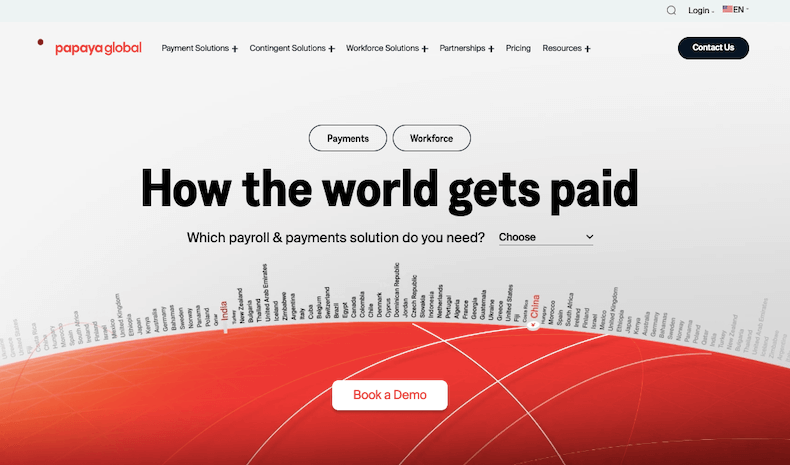



Deel Vs Papaya Global Comparison Summary
Most companies don’t plan to use an Employer of Record. It usually starts with one hire in another country, then a few more, and suddenly you’re dealing with local labor laws, tax registrations, payroll filings, and benefits you don’t fully understand.
That’s where EOR platforms come in. They let you hire internationally without setting up entities in every country.
Deel and Papaya Global are often compared because they both solve this problem well. But once you look beyond the surface, they reflect different ways of running global operations.
At first glance, they seem similar. Once you start using them, the differences become more obvious.
About Deel
Deel built its reputation by solving contractor payments across borders. That origin still shows in how the platform works.
Over time, it expanded into full EOR services, global payroll, and compliance management. Even with that expansion, the product remains focused on speed and usability. You can onboard employees quickly, generate compliant contracts without legal bottlenecks, and start running payroll without much setup.
This is why Deel shows up frequently in startups, remote-first companies, and fast-growing teams. It works well when hiring is happening across multiple countries at the same time.
Operationally, it is straightforward. Most workflows are self-service. HR teams don’t need heavy implementation or external consultants to get started.
In the market, Deel is often seen as the practical option. Not because it does everything, but because it removes friction at the point where teams feel it most.

About Papaya Global
Papaya Global approaches the problem from a different angle. Its foundation is global payroll infrastructure rather than contractor management.
The platform is designed to bring payroll, compliance, and workforce data into one system across countries. EOR is part of the offering, but it sits within a broader operational layer.
This difference shows up in who evaluates it. Papaya Global is often assessed by finance and operations teams, not just HR. Companies using it usually already have some international presence and want more control over how things are managed.
Where Papaya stands out is consistency. Payroll processes, reporting, and compliance tracking are more standardized across regions.
It feels less like a tool you start using immediately and more like a system you set up and run your operations through.
Deel vs Papaya Global: At a Glance
Deel is a better fit for:
✓ Expanding globally on a tight budget
✓ Managing a large international contractor base
✓ Hiring in emerging markets
✓ Teams that want a fast, lightweight, self-serve EOR platform
Papaya Global is a better fit for:
✓ Building a remote-first team with stronger benefits structures
✓ Competing for talent on employee experience and consistency
✓ First-time global hiring with more structured guidance
✓ Companies that want centralized payroll visibility and control
Deel vs Papaya Global: Editor’s Note
In our experience, the real shift does not happen when a company chooses a platform. It happens a few months later.
Early on, most teams just want to hire quickly and stay compliant without slowing down. Deel fits naturally in that phase.
Once payroll starts running across several countries, priorities change. Finance teams want consistency. Leadership wants clearer reporting. Processes need to hold up under scrutiny.
That is usually when companies start leaning toward platforms like Papaya Global.
Deel vs Papaya Global: Feature-by-Feature Breakdown
EOR Country Coverage
Both platforms support hiring in well over 100 countries, so coverage alone rarely drives the decision.
The difference shows up when hiring in less common markets. Deel tends to move faster in newer or emerging regions, which helps teams that are experimenting with global hiring.
Papaya Global also offers broad coverage, but onboarding can feel more methodical depending on the country and requirements.
Platform Type
Deel behaves like a tool teams use every day. You log in, onboard people, issue contracts, and run payments without much overhead.
Papaya Global behaves more like a system that sits underneath your operations. It connects payroll, compliance, and workforce data into a single layer.
You are not just using it. You are structuring processes around it.
Onboarding & Compliance
Most teams notice the difference here first.
With Deel, onboarding is quick and largely self-directed. Contracts are generated fast, and compliance steps happen in the background.
Papaya Global takes a more guided approach. There is more validation upfront, especially around employment terms and local requirements.
It takes a bit longer, but it reduces surprises later.
Payroll & Benefits
This is where the gap becomes clearer.
Deel handles payroll reliably across countries and works well for distributed teams that need flexibility. Benefits are available, though they can vary depending on location.
Papaya Global puts more emphasis on how payroll is structured and reported. Processes are more standardized, and benefits administration tends to be more consistent across regions.
This is often where finance teams start pushing for a more centralized approach.
Legal, IP & Security
Both platforms cover the essentials such as localized contracts, IP protection, and compliance requirements.
Papaya places more emphasis on documentation and audit readiness. It is designed for environments where compliance needs to stand up to internal or external review.
Deel covers the same areas but keeps the experience simpler and easier to navigate.
Platform UX & Integrations
Deel is easier to adopt. The interface is clean, and most teams can get started without training.
Papaya Global has improved its usability, but it still feels like a platform that requires setup and alignment across teams.
Smaller teams tend to prefer Deel quickly. Larger organizations are more willing to invest time in Papaya if it gives them better control.
Support Model
Papaya Global offers a more structured support model, often with dedicated account management and guided onboarding.
Deel provides responsive support as well, but the platform is clearly designed for self-service.
The difference becomes more noticeable when dealing with complex, multi-country setups.
Pricing Structure
Deel’s pricing is generally easier to understand and more predictable, especially for startups and contractor-heavy teams.
Papaya Global’s pricing can vary depending on how payroll, EOR, and additional services are bundled together.
At smaller scale, the difference may not stand out. As teams grow across countries, it becomes more visible.
Scalability
Both platforms scale, but in different ways.
Deel supports teams that are hiring quickly across multiple regions and need flexibility.
Papaya Global becomes more useful when companies want to standardize payroll, reporting, and compliance across a growing international workforce.
It depends on what kind of complexity you are dealing with.
Deel vs Papaya Global: EOR Capabilities Side-by-Side
The table below focuses on Employer of Record capabilities, where practical differences usually appear.
| EOR Feature | Deel | Papaya Global |
|---|---|---|
| EOR Country Coverage | 150+ countries with strong emerging market reach | 160+ countries with structured global coverage |
| Entity & Partner Model | Mix of owned entities and partners, optimized for speed | Partner-driven model with centralized oversight |
| Localized Employment Contracts | Fast, automated contract generation | More customized, compliance-driven contracts |
| Compliance Management | Built-in and simplified for ease of use | Detailed tracking with stronger reporting |
| Payroll Execution | Efficient and flexible | Standardized and process-driven |
| Tax Withholding & Filings | Managed automatically | Managed with deeper visibility and reporting |
| Statutory Benefits Administration | Flexible, varies by country | More consistent and structured across regions |
| Optional / Supplemental Benefits | Available but less standardized | Stronger global benefits structuring |
| Onboarding Model | Fast, self-service | Guided and controlled onboarding |
| Offboarding & Terminations | Streamlined workflows | More structured and compliance-focused |
| IP Assignment & Confidentiality | Standard protection built into contracts | Strong documentation and audit focus |
| Worker Types Supported | Employees and contractors with strong contractor support | Employees and contractors with unified payroll layer |
| Statutory Leave Tracking | Basic tracking capabilities | More structured leave management |
| Multi-Currency Payroll | Flexible handling | Centralized and standardized |
| Expense & Reimbursement Handling | Simple workflows | Integrated into payroll systems |
| Equity & Variable Pay Handling | Flexible support | More structured handling |
| Audit & Documentation Support | Standard documentation | Strong audit readiness |
| Support Style | Self-service with responsive help | High-touch, account-managed |
| Best EOR Use Case | Fast global hiring and contractor management | Structured global workforce and payroll control |
The takeaway is simple. Deel is easier to move with. Papaya Global gives more control once operations become more complex.
Deel Vs Papaya Global: Final Recommendation
Choose Deel if you:
• Need to hire quickly across multiple countries without delays
• Manage a large contractor workforce alongside employees
• Want a platform your team can use without formal implementation
• Prefer flexibility in how you run global hiring
Choose Papaya Global if you:
• Need centralized payroll visibility across multiple countries
• Operate with strong finance or compliance oversight
• Want structured onboarding and standardized processes
• Are scaling a larger international workforce with reporting needs
Verdict
Both platforms solve the same problem. They allow companies to hire globally without setting up local entities.
Deel works well for teams that prioritize speed and flexibility. Papaya Global becomes more valuable when operations grow more complex and require consistency across regions.
The better choice depends on how your organization prefers to operate today and how that will change as you scale.