


Rippling Vs. Papaya Global: EOR Comparison 2026

A detailed side-by-side Rippling Vs. Papaya Global comparison to help you select the best option between these two solutions. We have considered top features, community rating, country coverage, pros and cons, pricing and other details to help you choose the right solution.
Manjuri-Dutta
Edited By: Manjuri Dutta

Co-founder & Editor

Rippling-Logo

Rippling

Avg 4.8 (13,600 Ratings Analyzed)
Papaya Global Logo

Papaya Global

Avg 4.2 (125 Ratings Analyzed)
Rippling EOR Review
Rippling is best for hiring and managing international employees without the hassle of setting up local entities.

Rippling Company Profile

Co Name: Rippling People Center, Inc.
HQ: California, United States
Est Year: 2016
Co Size: 1001-5000 employees
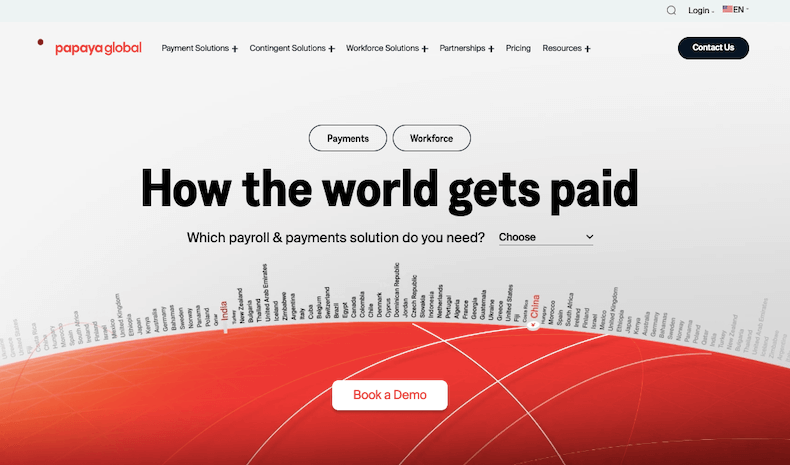
Papaya Global Review
Papaya Global is best for managing global employment, payroll, and compliance through a unified Employer of Record platform.

Papaya Global Company Profile

Co Name: Papaya Global Ltd.
HQ: New York, New York, United States
Est Year: 2016
Co Size: 501-1000 employees

Rippling Vs. Papaya Global: Quick Comparison

This quick comparison highlights the key differences between Rippling Vs. Papaya Global, including country coverage, onboarding speed, pricing transparency, and the types of companies each platform is best suited for.
Rippling-Logo

Rippling

Entity Model
Hybrid
Onboarding Speed
Fast
Best For
Mid-market
Payroll & Compliance
Handles complex cases
Global Coverage Strength
Deep, limited countries
Country Coverage
50+ Countries
Benefits Quality
Standard
Pricing Transparency
Quote-based
Support Model
Shared support
Best Use Case
Distributed teams
Papaya Global Logo

Papaya Global

Entity Model
Hybrid
Onboarding Speed
Moderate
Best For
Enterprise
Payroll & Compliance
Handles complex cases
Global Coverage Strength
Broad, shallow
Country Coverage
160 Countries
Benefits Quality
Competitive
Pricing Transparency
Quote-based
Support Model
Dedicated manager
Best Use Case
Compliance-heavy hiring

Rippling Vs. Papaya Global: Community Review Summary

Rippling Vs. Papaya Global We have checked community ratings for both the products to give you an idea about how both the platform are performing with real user data.

Rippling: Community Rating

Avg 4.8 (13,600 Ratings Analyzed)
g2
4.8/5
capterra-logo-icon
4.9/5
Trustpilot
4.5/5

Papaya Global: Community Rating

Avg 4.2 (125 Ratings Analyzed)
g2
4.5
capterra-logo-icon
4.4
Trustpilot
2.9

Rippling Vs. Papaya Global: Community Sentiment & Ratings

We have looked at all the community reviews of Rippling Vs. Papaya Global and generated these ratings on various parameters.
Overall Rating & Sentiments
Based on 13,600 user reviews.
4.8
User Sentiments
Positive 81%
Neutral 12%
Negative 7%

Ratings of Rippling

Ease of Use
Clean, intuitive UI; reviewers praise simplified workflows but note learning curve for admin features.
4.6/5
Features & Functionality
Deep feature set across payroll, EOR, IT device management and spend, one platform covers more use cases than most rivals.
4.8/5
Compliance & Risk Management
Strong controls and audited reports (SOC/SOC1/SOC2 presence); good for regulated payroll practices.
4.6/5
Payroll Accuracy & Timeliness
Generally reliable payroll runs with solid reconciliation tools; isolated reports of timing or tax-setup issues.
4.6/5
Customer Support Quality
Mostly positive but mixed, many laud onboarding teams, while some flag slow escalation on complex cases.
4.2/5
Pricing & Value
High value when consolidating vendors at scale; cost may be prohibitive for smaller use cases.
4.0/5
Onboarding Speed & Experience
Smooth for teams with implementation resources; smaller buyers sometimes experience heavier lift.
4.3/5
Platform Stability & Integrations
Stable core platform and many prebuilt integrations; integrations occasionally need mapping work.
4.5/5
Benefits Administration Quality
Robust benefits modules and carrier integrations in supported regions; limited local offerings in some international markets.
4.4/5
Global Coverage & Scalability
Strong global payroll/EOR footprint and enterprise scalability; suitable for multi-country deployments.
4.7/5
Overall Rating & Sentiments
Based on 125 user reviews.
4.2
User Sentiments
Positive 72%
Neutral 8%
Negative 20%

Ratings of Papaya Global

Ease of Use
Interface is structured and professional but requires training to navigate efficiently
3.8/5
Features & Functionality
Very strong global payroll engine with centralized reporting; less focused on broader HR workflows.
4.4/5
Compliance & Risk Management
Compliance is a clear strength, especially for multi-country payroll and statutory reporting.
4.7/5
Payroll Accuracy & Timeliness
Payroll accuracy is highly rated once configured; early-stage setup errors appear in some reviews.
4.6/5
Customer Support Quality
Mixed sentiment, dedicated payroll experts are praised, but response times can vary by region.
4.0/5
Pricing & Value
Viewed as premium-priced; value is strongest for complex, multi-entity global payroll needs.
3.9/5
Onboarding Speed & Experience
Onboarding is thorough but often described as slow, especially during multi-country rollouts.
3.8/5
Platform Stability & Integrations
Platform is stable and integrates well with major HRIS tools, though customization can be rigid.
4.2/5
Benefits Administration Quality
Solid benefits handling through local partners; depth varies by country.
4.3/5
Global Coverage & Scalability
Excellent global reach and scalability, particularly for enterprises operating in many jurisdictions.
4.8/5

Rippling Vs. Papaya Global: Pros & Cons

Rippling Pros & Cons

Pros of Rippling

Unified HR + IT Platform
Combines HR, payroll, benefits, and device management in a single system, reducing operational tool sprawl.
Powerful Workflow Automation
Custom workflows automate onboarding, app provisioning, payroll approvals, and employee lifecycle tasks.
Deep SaaS Integrations
Connects with hundreds of workplace apps and automatically manages access when employees join or leave.
Automated Payroll Engine
Payroll calculations, tax filings, and deductions are largely automated once configuration is complete.
Flexible Modular Architecture
Companies can add HR, IT, finance, or device management modules as operational needs grow.

Cons of Rippling

Pricing Scales Quickly
Costs increase as additional modules and features are enabled across HR, IT, and payroll.
Complex Initial Setup
Configuring workflows, policies, and automation rules requires time and technical familiarity.
Feature Depth Overload
Smaller organizations may find the platform more complex than necessary for basic HR operations.

Papaya Global Pros & Cons

Pros of Papaya Global

Global Payroll Coverage
Supports payroll and employment compliance across more than 160 countries with localized regulatory handling.
Compliance Expertise
Strong compliance infrastructure helps HR teams manage tax rules, statutory benefits, and labor regulations globally.
Unified Workforce Platform
Combines EOR, payroll, and contractor management in a single platform instead of fragmented tools.
Automated Payroll Workflows
Payroll calculations, tax deductions, and reporting processes are heavily automated for multi-country payroll operations.
Global Hiring Infrastructure
Makes it possible to hire international employees without establishing local legal entities.
Detailed Payroll Reporting
Finance teams benefit from consolidated payroll reporting across countries and currencies.
Contractor Payment Tools
Built-in contractor payment system simplifies paying international freelancers in multiple currencies.

Cons of Papaya Global

Premium Pricing Structure
Pricing is higher than many EOR competitors, particularly for companies hiring in only a few countries.
Implementation Time
Initial setup and payroll configuration can take longer than expected for complex global payroll environments.
Support Response Delays
Some reviewers report slower response times from support during critical payroll processing periods.
Learning Curve For Admins
Payroll configuration and reporting features require time for HR teams unfamiliar with global payroll systems.
Rippling-Logo

Rippling

Avg 4.8 (13,600 Ratings Analyzed)
Papaya Global Logo

Papaya Global

Avg 4.2 (125 Ratings Analyzed)

Rippling Vs. Papaya Global Comparison Summary

When companies start hiring across borders, the first real constraint isn’t talent, it’s infrastructure. You need a legal employer, compliant payroll, localized contracts, and a way to manage everything without stitching together five different vendors. That’s where Employer of Record (EOR) platforms come in.

Two names that come up often in that conversation are Rippling and Papaya Global. On paper, both solve the same problem: hire and pay people globally without setting up entities. But in practice, they’re built with very different starting points.

Rippling comes from an HRIS and IT systems background. Papaya Global is rooted in payroll infrastructure and cross-border payments.

On the surface, both platforms overlap. In reality, they tend to appeal to different types of teams and operational priorities.

About Rippling

Rippling started as an all-in-one workforce platform. It combines HR, payroll, IT device management, and identity access into a single system. The idea is simple: instead of connecting multiple tools, everything lives under one roof.

In global hiring, Rippling extends this model through its EOR service. Companies already using Rippling for HR or IT often adopt its EOR to keep things centralized. That continuity is a big part of its appeal.

Where it stands out operationally is control. HR and operations teams can manage onboarding, permissions, payroll, and even device provisioning in one workflow. For companies scaling quickly, especially in tech, this reduces a lot of coordination overhead.

Its reputation in the market reflects that positioning. Rippling is often seen as a modern, product-led platform that prioritizes automation and system design over traditional service-heavy models.

Rippling

About Papaya Global

Papaya Global approaches the same problem from a different angle. Its foundation is global payroll orchestration, not HR software.

The platform is designed to handle complex international payroll across multiple countries, entities, and worker types. Its EOR offering builds on top of that, allowing companies to hire employees where they don’t have a local presence.

Where Papaya tends to stand out is in financial precision and global coverage depth. It’s often used by companies that already have distributed teams and need consistency across payroll operations rather than a unified HR system.

You’ll also see Papaya more frequently in organizations where finance teams are heavily involved in vendor selection. The reporting, compliance handling, and payment infrastructure are closer to what finance leaders expect.

In the market, Papaya is generally viewed as a payroll-first platform that expanded into EOR, rather than the other way around.

Papaya Global Review

Rippling Vs. Papaya Global: At a Glance

Use CaseBest Option
Expanding globally on a tight budgetRippling
Building a remote-first team with strong benefitsPapaya Global
Managing a large international contractor baseRippling
Competing for talent on candidate experiencePapaya Global
Hiring in emerging marketsRippling
First-time global hiring with more guidancePapaya Global

Rippling Vs. Papaya Global: Editor’s Note

In our experience, the real difference shows up after the first few hires.

Rippling tends to appeal to operations-led teams that want systems to “just work” together. It’s about efficiency, automation, and keeping everything in one place.

Papaya Global, on the other hand, leans toward finance and compliance-driven organizations. The focus is accuracy, reporting clarity, and global payroll consistency.

What teams often realize after hiring in several countries is this: the decision isn’t just about hiring internationally, it’s about how you want to run your global operations day to day.

Rippling vs Papaya Global: Feature-by-Feature Breakdown

EOR Country Coverage

Both platforms support hiring across a large number of countries, but the way they achieve that differs.

Papaya Global has built an extensive partner network over time, which gives it strong reach, especially in complex or less common markets. Rippling’s coverage is solid and growing quickly, though historically it has focused more on high-demand hiring regions.

Where this shows up: if you’re hiring in niche or harder-to-reach jurisdictions, Papaya tends to feel more mature.

Platform Type

This is where the philosophical gap becomes obvious.

Rippling is a full workforce platform. EOR is just one module alongside HRIS, IT, and identity management. Papaya Global is not trying to be your HR system. It’s a payroll and payments engine with EOR capabilities layered in.

Short version: Rippling replaces tools. Papaya connects systems.

Onboarding & Compliance

Rippling’s onboarding experience is tightly integrated. Contracts, payroll setup, and system access all happen in one flow. Papaya’s onboarding is more compliance-heavy. There’s often more emphasis on documentation, local requirements, and validation.

Reality check: Rippling feels faster. Papaya feels more deliberate.

Payroll & Benefits

Papaya Global’s strength shows here. Its payroll engine is built for multi-country consistency, and benefits handling is often more localized and structured.

Rippling’s payroll is strong, especially for companies already using its HR stack, but it’s not as deeply specialized in global payroll complexity.

If payroll accuracy across many jurisdictions is your biggest concern, Papaya usually has the edge.

Legal, IP & Security

Both platforms handle IP assignment, contracts, and compliance, but their approaches differ slightly.

Papaya tends to emphasize legal rigor and documentation. It’s closer to a traditional global employment provider. Rippling integrates these elements into its system workflows, which makes them easier to manage operationally.

Practical note: neither is weak here, but the experience feels different.

Platform UX & Integrations

Rippling is known for its product design. The UI is clean, workflows are intuitive, and automation is a core strength. Papaya’s interface is functional but less polished. Its strength lies more in backend capability than front-end experience.

If your team values ease of use and minimal training, Rippling stands out quickly.

Support Model

Papaya Global leans more toward a service-oriented model, especially for complex payroll scenarios.

Rippling is more product-led, with support layered on top. This becomes noticeable when something unusual happens. Papaya often feels more hands-on. Rippling expects the system to handle most cases.

Pricing Structure

Rippling is generally more transparent and modular. You pay for what you use across its platform. Papaya’s pricing can vary depending on countries, complexity, and services required.

Honest take: neither is “cheap,” but Rippling tends to feel more predictable early on.

Scalability

Rippling scales well for companies building a unified global workforce system. Papaya scales well for organizations managing complex, multi-country payroll operations.

Rippling vs Papaya Global: EOR Capabilities Side-by-Side

The table below focuses strictly on Employer of Record capabilities, where meaningful differences usually appear.

EOR FeatureRipplingPapaya Global
EOR Country Coverage50+ Countries160+ Countries
Entity & Partner ModelMix of owned entities and partnersPrimarily partner-driven global network
Localized Employment ContractsStandardized with localization supportHighly localized and compliance-heavy
Compliance ManagementAutomated within platform workflowsDeep compliance focus with local expertise
Payroll ExecutionIntegrated with HR platformDedicated global payroll engine
Tax Withholding & FilingsAutomated and system-drivenDetailed handling with strong reporting
Statutory Benefits AdministrationIncluded, varies by countryStrong and structured across regions
Optional / Supplemental BenefitsAvailable but less flexible globallyMore robust options in many markets
Onboarding ModelFast, system-driven onboardingMore guided and compliance-focused
Offboarding & TerminationsManaged within workflowsMore advisory-driven approach
IP Assignment & ConfidentialityBuilt into onboarding workflowsExplicit and legally structured
Worker Types SupportedEmployees and contractorsEmployees, contractors, complex worker types
Statutory Leave TrackingIntegrated into HR systemManaged with payroll compliance focus
Multi-Currency PayrollSupported across platformCore strength with strong FX handling
Expense & Reimbursement HandlingBuilt into systemSupported but less central
Equity & Variable Pay HandlingIntegrated with HR modulesSupported with payroll alignment
Audit & Documentation SupportAccessible via system recordsStrong audit trails and reporting
Support StyleProduct-led with support accessService-heavy with guidance
Best EOR Use CaseCompanies wanting unified HR + EOR systemCompanies prioritizing payroll accuracy and compliance

Rippling Vs. Papaya Global: Final Recommendation

Choose Rippling if you:

• Want HR, payroll, and EOR in one system
• Are scaling quickly and need operational efficiency
• Prefer automation over service-heavy processes

Choose Papaya Global if you:

• Operate across many countries with complex payroll needs
• Need strong compliance and audit readiness
• Want more hands-on support for global employment

Verdict

Both platforms solve the same fundamental problem, hiring internationally without setting up local entities.

But they approach it from opposite directions.

Rippling is building a unified workforce system where EOR is just one piece of a larger platform.
Papaya Global is building a global payroll infrastructure where EOR fits into a broader financial framework.

The better choice depends less on features and more on how your organization prefers to operate.

Rippling Vs. Papaya Global Comparison FAQs

Papaya Global typically supports a wider range of countries, particularly in complex or less common hiring markets. Rippling covers most major hiring regions and continues to expand, but Papaya’s network is generally more mature in harder-to-reach jurisdictions.
Rippling often feels more predictable in pricing, especially if you’re already using its broader HR platform. Papaya Global’s pricing can vary more depending on country-specific requirements, compliance complexity, and service levels.
Rippling is usually a better fit for startups that want a single system to manage HR, payroll, and global hiring together. Papaya Global tends to be more suitable for companies that already have some international footprint and need stronger payroll infrastructure.
Yes, both platforms support contractor management alongside EOR employees. Rippling integrates contractors into its unified workforce system, while Papaya Global manages them within its global payroll and payments framework.
Both platforms offer localized employment contracts that align with local labor laws. Papaya Global typically places more emphasis on legal detail and compliance structure, while Rippling focuses on making contracts part of a streamlined onboarding workflow.
Papaya Global is generally stronger in global payroll execution, especially for multi-country operations that require consistency and detailed reporting. Rippling’s payroll is reliable but designed to work as part of its broader HR platform.
Rippling usually offers a more modern and intuitive interface, with strong automation across workflows. Papaya Global is more functional in its design, prioritizing payroll accuracy and backend processes over front-end experience.
Rippling is typically faster to implement, particularly if you’re adopting multiple modules at once. Papaya Global may take longer to roll out but provides a more structured onboarding process, especially for companies dealing with complex compliance requirements.

Our Comparison Methodology

Our side-by-side comparisons reflect how companies actually evaluate Employer of Record providers before making a hiring or compliance decision.

We compare platforms across a small set of high-impact factors:

  • Employment & compliance model: How each provider delivers EOR services, including entity structure, compliance responsibility, and risk ownership.
  • Country coverage quality: Depth of in-country support, not just the number of countries listed.
  • Operational execution: Hiring, payroll accuracy, benefits handling, and offboarding reliability.
  • Pricing structure: Cost transparency, billing clarity, and long-term predictability.
  • Platform & support maturity: Day-to-day usability, scalability, and service reliability.
  • Customer experience signals: Consistent patterns from third-party user feedback.

Outcomes are fit-based and highlight trade-offs depending on hiring needs, regions, and risk tolerance. No platform is treated as universally superior.

Comparisons are written independently and are not influenced by commercial relationships.

Manjuri-Dutta
Article By: Manjuri Dutta

Manjuri Dutta is the co-founder and Content Editor at Employer Records, a platform specialized in discovering best Employer-of-Record services for global hiring. She brings a thoughtful and expert voice to articles designed to inform HR leaders, practitioners, and tech buyers alike.

Related Comparisons

Multiplier Vs. Papaya Global

Multiplier Vs. Papaya Global

Oyster Vs. Papaya Global

Oyster Vs. Papaya Global

Remote Vs Papaya Global

Remote Vs Papaya Global

Deel Vs Papaya Global

Deel Vs Papaya Global

Pebl Vs Rippling

Pebl Vs Rippling

Deel Vs Oyster HR

Deel Vs Oyster HR

Multiplier Vs Hire with Columbus

Multiplier Vs Hire with Columbus

Multiplier Vs Oyster HR

Multiplier Vs Oyster HR

This website uses cookies to enhance user experience and to analyze performance and traffic on our website. By continuing to browse this site you are agreeing to our use of cookies.