



Oyster Vs. Papaya Global: Detailed Comparison 2026

A detailed side-by-side Oyster Vs. Papaya Global comparison to help you select the best option between these two solutions. We have considered top features, community rating, country coverage, pros and cons, pricing and other details to help you choose the right solution.
Manjuri-Dutta
Edited By: Manjuri Dutta

Co-founder & Editor

Oysterhr Logo

Oyster HR

Avg 4.5 (1,200 Ratings Analyzed)
Papaya Global Logo

Papaya Global

Avg 4.2 (125 Ratings Analyzed)
Oyster HR Review
Oyster is best for hiring and managing full-time international employees without setting up local legal entities.

Oyster HR Company Profile

Co Name: Oyster HR Inc.
HQ: Charlotte, North Carolina, United States
Est Year: 2020
Co Size: 501-1000 employees
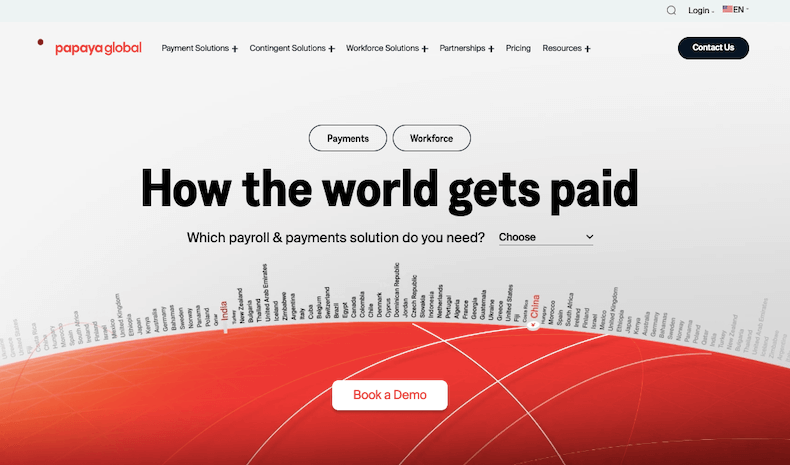
Papaya Global Review
Papaya Global is best for managing global employment, payroll, and compliance through a unified Employer of Record platform.

Papaya Global Company Profile

Co Name: Papaya Global Ltd.
HQ: New York, New York, United States
Est Year: 2016
Co Size: 501-1000 employees

Oyster Vs. Papaya Global: Quick Comparison

This quick comparison highlights the key differences between Oyster Vs. Papaya Global, including country coverage, onboarding speed, pricing transparency, and the types of companies each platform is best suited for.
Oysterhr Logo

Oyster HR

Entity Model
Hybrid
Onboarding Speed
Fast
Best For
SMBs
Payroll & Compliance
Handles complex cases
Global Coverage Strength
Broad, shallow
Country Coverage
180 Countries
Benefits Quality
Standard
Pricing Transparency
Public pricing
Support Model
Shared support
Best Use Case
Distributed teams
Papaya Global Logo

Papaya Global

Entity Model
Hybrid
Onboarding Speed
Moderate
Best For
Enterprise
Payroll & Compliance
Handles complex cases
Global Coverage Strength
Broad, shallow
Country Coverage
160 Countries
Benefits Quality
Competitive
Pricing Transparency
Quote-based
Support Model
Dedicated manager
Best Use Case
Compliance-heavy hiring

Oyster Vs. Papaya Global: Community Review Summary

Oyster Vs. Papaya Global We have checked community ratings for both the products to give you an idea about how both the platform are performing with real user data.

Oyster HR: Community Rating

Avg 4.5 (1,200 Ratings Analyzed)
g2
4.4/5
Trustpilot
4.5/5
capterra-logo-icon
4.6/5

Papaya Global: Community Rating

Avg 4.2 (125 Ratings Analyzed)
g2
4.5
capterra-logo-icon
4.4
Trustpilot
2.9

Oyster Vs. Papaya Global: Community Sentiment & Ratings

We have looked at all the community reviews of Oyster Vs. Papaya Global and generated these ratings on various parameters.
Overall Rating & Sentiments
Based on 1,200 user reviews.
4.5
User Sentiments
Positive 78%
Neutral 10%
Negative 12%

Ratings of Oyster HR

Ease of Use
Users highlight an intuitive, clean interface and smooth onboarding.
4.6/5
Features & Functionality
Comprehensive EOR features , payroll, compliance, benefits, local contracts, for global teams.
4.5/5
Compliance & Risk Management
Strong local compliance coverage across 180+ countries, with legal-reviewed contracts and local-expert support.
4.6/5
Payroll Accuracy & Timeliness
Payroll and taxes handled reliably; users report correct payments and prompt processing.
4.5/5
Customer Support Quality
Support is generally responsive and backed by experienced local-law experts.
4.4/5
Pricing & Value
Viewed as fair for full-service global EOR, though pricing may feel steep for small teams.
4.1/5
Onboarding Speed & Experience
Onboarding workflows and country-specific contracts make onboarding efficient.
4.4/5
Platform Stability & Integrations
Platform is stable and integrates with common HR/finance tools, though some users note limited integrations.
4.3/5
Benefits Administration Quality
Offers localized benefits (healthcare, paid leave, etc.) aligned with local laws.
4.5/5
Global Coverage & Scalability
Supports hiring in 180+ countries and scales well from small teams to large global workforces.
4.7/5
Overall Rating & Sentiments
Based on 125 user reviews.
4.2
User Sentiments
Positive 72%
Neutral 8%
Negative 20%

Ratings of Papaya Global

Ease of Use
Interface is structured and professional but requires training to navigate efficiently
3.8/5
Features & Functionality
Very strong global payroll engine with centralized reporting; less focused on broader HR workflows.
4.4/5
Compliance & Risk Management
Compliance is a clear strength, especially for multi-country payroll and statutory reporting.
4.7/5
Payroll Accuracy & Timeliness
Payroll accuracy is highly rated once configured; early-stage setup errors appear in some reviews.
4.6/5
Customer Support Quality
Mixed sentiment, dedicated payroll experts are praised, but response times can vary by region.
4.0/5
Pricing & Value
Viewed as premium-priced; value is strongest for complex, multi-entity global payroll needs.
3.9/5
Onboarding Speed & Experience
Onboarding is thorough but often described as slow, especially during multi-country rollouts.
3.8/5
Platform Stability & Integrations
Platform is stable and integrates well with major HRIS tools, though customization can be rigid.
4.2/5
Benefits Administration Quality
Solid benefits handling through local partners; depth varies by country.
4.3/5
Global Coverage & Scalability
Excellent global reach and scalability, particularly for enterprises operating in many jurisdictions.
4.8/5

Oyster Vs. Papaya Global: Pros & Cons

Oyster HR Pros & Cons

Pros of Oyster HR

Entity-Free Hiring
Hire full-time international employees legally without setting up a local business entity in each country.
Automated Contracts
Generate localized employment agreements that reflect country-specific labor laws and statutory requirements automatically.
Multi-Country Payroll
Manage payroll for distributed teams across multiple countries from a single centralized system dashboard.
Built-In Compliance Tools
Access country-specific compliance documentation and employment policy guidance in one platform interface.
HRIS Integrations
Sync employee records with external HR and finance systems to avoid duplicate data entry across tools.

Cons of Oyster HR

Benefits Cost Variation
Health insurance and statutory benefits pricing varies widely depending on employee location and provider availability.
Support Queue Delays
Customer support response times can increase during peak onboarding periods or regulatory escalations.
Pricing Tier Jumps
Monthly costs tend to rise significantly as hiring volume increases across new international markets.
Limited Customization
Employment contract templates allow only minor adjustments beyond predefined country-level legal frameworks.

Papaya Global Pros & Cons

Pros of Papaya Global

Global Payroll Coverage
Supports payroll and employment compliance across more than 160 countries with localized regulatory handling.
Compliance Expertise
Strong compliance infrastructure helps HR teams manage tax rules, statutory benefits, and labor regulations globally.
Unified Workforce Platform
Combines EOR, payroll, and contractor management in a single platform instead of fragmented tools.
Automated Payroll Workflows
Payroll calculations, tax deductions, and reporting processes are heavily automated for multi-country payroll operations.
Global Hiring Infrastructure
Makes it possible to hire international employees without establishing local legal entities.
Detailed Payroll Reporting
Finance teams benefit from consolidated payroll reporting across countries and currencies.
Contractor Payment Tools
Built-in contractor payment system simplifies paying international freelancers in multiple currencies.

Cons of Papaya Global

Premium Pricing Structure
Pricing is higher than many EOR competitors, particularly for companies hiring in only a few countries.
Implementation Time
Initial setup and payroll configuration can take longer than expected for complex global payroll environments.
Support Response Delays
Some reviewers report slower response times from support during critical payroll processing periods.
Learning Curve For Admins
Payroll configuration and reporting features require time for HR teams unfamiliar with global payroll systems.
Oysterhr Logo

Oyster HR

Avg 4.5 (1,200 Ratings Analyzed)
Papaya Global Logo

Papaya Global

Avg 4.2 (125 Ratings Analyzed)

Oyster Vs. Papaya Global Comparison Summary

If you’ve spent any time looking at Employer of Record platforms, you’ve probably noticed how quickly the category has matured.

What started as a niche solution for hiring abroad without setting up entities has become a core part of how modern companies scale internationally.

That’s exactly why comparisons like Oyster vs Papaya Global come up so often. On the surface, both platforms solve the same problem: hire, pay, and manage employees across borders without dealing with local incorporation. But once you get past that surface layer, the differences start to matter.

In practice, these two platforms tend to appeal to different priorities. One leans toward simplicity, transparency, and remote-first culture.

The other is more infrastructure-heavy, designed for finance teams that need tighter control over payroll operations across multiple regions.

The distinction isn’t always obvious upfront. It usually becomes clear after you’ve hired in three or four countries and start dealing with real operational complexity.

About Oyster

Oyster built its reputation around making global hiring feel accessible, especially for companies that are new to international expansion. It’s positioned as a remote-first employment platform, with EOR as a core offering rather than just one piece of a larger system.

Most teams that choose Oyster are early to mid-stage companies scaling distributed teams. Think startups hiring their first employees outside their home country, or remote-native companies expanding into new regions without building local HR infrastructure.

Where Oyster stands out is in how it simplifies the experience. The platform is clean, onboarding flows are structured, and compliance steps are guided rather than buried in legal detail.

It also puts a noticeable emphasis on employee experience, particularly around benefits and transparency.

In the broader market, Oyster is often seen as one of the more approachable EOR providers. Not necessarily the most complex or feature-heavy, but one that teams can adopt quickly without needing a dedicated global payroll specialist.

Oyster HR Review

About Papaya Global

Papaya Global comes from a different angle. It started with global payroll infrastructure and expanded into EOR, which shows up clearly in how the platform is structured.

It’s typically used by larger organizations or companies that already have some international footprint. Finance and operations teams tend to drive the decision here, especially when there’s a need to consolidate payroll across multiple countries into a single system.

Papaya’s strength is in orchestration. It connects payroll, payments, compliance, and reporting into one centralized layer. If you’re managing multiple vendors, entities, or worker types, that level of control becomes valuable quickly.

Reputation-wise, Papaya is often associated with scale and financial precision. It’s less about “getting started quickly” and more about “managing complexity without losing visibility.”

Papaya Global Review

At a Glance: Who Each Platform Is Best For

Use CaseBest Option
Expanding globally on a tight budgetOyster
Building a remote-first team with strong benefitsPapaya Global
Managing a large international contractor baseOyster
Competing for talent on candidate experiencePapaya Global
Hiring in emerging marketsOyster
First-time global hiring with more guidancePapaya Global

Oyster vs Papaya Global: Editor’s Note

In our experience, the real difference shows up in who inside the company is leading the decision.

When HR or people teams are driving global hiring, Oyster often feels more natural. It reduces friction, keeps things understandable, and supports a remote-first mindset.

When finance or operations teams take the lead, Papaya Global tends to win. It gives them tighter control over payroll flows, compliance reporting, and multi-country coordination.

What teams often realize after hiring in several countries is this: global hiring isn’t just about compliance. It’s about how much operational complexity you’re willing to manage internally.

Oyster vs Papaya Global: Feature-by-Feature Breakdown

EOR Country Coverage

Both platforms cover a wide range of countries, but they approach expansion differently.

Oyster has steadily expanded its coverage with a focus on high-demand remote hiring markets. It’s strong across Europe, Latin America, and parts of Asia.

Papaya Global also offers broad coverage, but with more emphasis on enterprise-grade consistency. It’s less about how many countries are listed and more about how standardized the experience is across them.

Where this shows up: Papaya tends to feel more predictable at scale, while Oyster feels more flexible during early expansion.

Platform Type

Oyster is an EOR-first platform that has expanded into contractor management and basic global HR workflows.

Papaya Global is fundamentally a payroll and payments platform with EOR layered on top.

That difference matters.

If your core challenge is hiring internationally, Oyster aligns well. If your challenge is managing payroll across entities, vendors, and countries, Papaya fits better.

Onboarding & Compliance

Oyster’s onboarding experience is structured and guided. It walks teams through contracts, compliance steps, and required documentation in a way that’s easy to follow.

Papaya’s onboarding is more process-driven. It integrates compliance into broader payroll and operational workflows rather than treating it as a standalone step.

Practical note:
Oyster reduces the learning curve. Papaya reduces long-term operational fragmentation.

Payroll & Benefits

Papaya Global is stronger here, particularly for companies managing complex payroll scenarios across multiple countries.

It offers deeper payroll orchestration, consolidated reporting, and tighter control over payments.

Oyster covers payroll effectively for EOR employees, but it’s not trying to be a full global payroll engine.

On benefits, Oyster tends to be more employee-friendly, with localized offerings that are easier to understand and communicate.

Legal, IP & Security

Both platforms handle IP assignment, employment contracts, and compliance requirements, but the emphasis differs.

Oyster focuses on making legal structures accessible and transparent.

Papaya leans into auditability and control, which is often more important for larger organizations.

Reality check:
Both are compliant. The difference is how visible and controllable that compliance feels.

Platform UX & Integrations

Oyster’s interface is clean and intuitive. It’s designed for HR teams that don’t want to spend time figuring out the system.

Papaya’s platform is more complex, but also more powerful. It integrates with payroll systems, finance tools, and ERP environments more deeply.

This is one of those trade-offs where simplicity and capability sit on opposite sides.

Support Model

Oyster provides structured support with a focus on onboarding and ongoing HR guidance.

Papaya Global offers more operational support tied to payroll execution and compliance management.

Where this shows up: Oyster helps you understand what to do. Papaya helps you execute at scale.

Pricing Structure

Oyster is generally more transparent and predictable, especially for EOR pricing.

Papaya’s pricing can vary depending on the complexity of payroll, number of countries, and services used.

Honest take: Oyster is easier to budget for. Papaya requires more upfront scoping but can consolidate multiple costs.

Scalability

Oyster scales well for distributed teams growing steadily across regions.

Papaya Global scales better for organizations managing high employee volumes, multiple entities, and complex payroll operations.

This is less about “can it scale” and more about “how much complexity it can absorb.”

Oyster vs Papaya Global: EOR Capabilities Side-by-Side

The table below focuses strictly on Employer of Record capabilities, where meaningful differences usually appear.

EOR FeatureOysterPapaya Global
EOR Country CoverageBroad, focused on remote hiring marketsBroad, with enterprise consistency
Entity & Partner ModelMix of owned entities and partnersHeavier use of partner network with centralized control
Localized Employment ContractsStrong, easy-to-deploy templatesHighly structured, tied to payroll systems
Compliance ManagementGuided, HR-friendly approachCentralized, audit-focused compliance
Payroll ExecutionReliable for EOR employeesAdvanced global payroll orchestration
Tax Withholding & FilingsManaged within EOR workflowsDeep integration with payroll systems
Statutory Benefits AdministrationIncluded and localizedComprehensive, with detailed reporting
Optional / Supplemental BenefitsEmployee-friendly optionsMore customizable but complex
Onboarding ModelStep-by-step, intuitiveProcess-driven, integrated with payroll
Offboarding & TerminationsStructured and compliantDetailed, with strong documentation
IP Assignment & ConfidentialityStandardized and accessibleMore configurable, enterprise-ready
Worker Types SupportedEmployees and contractorsEmployees, contractors, and complex workforce setups
Statutory Leave TrackingBuilt-in and simpleIntegrated into payroll workflows
Multi-Currency PayrollSupportedAdvanced, with payment orchestration
Expense & Reimbursement HandlingBasic supportMore robust capabilities
Equity & Variable Pay HandlingLimitedMore advanced handling
Audit & Documentation SupportModerateStrong, audit-ready reporting
Support StyleHR-focused guidanceOperations and payroll-focused support
Best EOR Use CaseRemote-first hiring and expansionComplex, multi-country workforce management

The takeaway here is straightforward: Oyster prioritizes usability and speed, while Papaya Global prioritizes control and depth.

Oyster vs Papaya Global: Final Recommendation

Choose Oyster if you:

  • Want to start hiring globally without building internal expertise first
  • Prioritize a clean, intuitive experience for HR teams
  • Are managing a distributed or remote-first workforce
  • Need predictable pricing and faster onboarding

Choose Papaya Global if you:

  • Are managing payroll across multiple countries or entities
  • Need strong financial reporting and compliance visibility
  • Have a finance or operations-led global expansion strategy
  • Expect workforce complexity to increase significantly over time

Verdict

Both platforms solve the same fundamental problem, but they approach it from different directions.

Oyster makes global hiring easier to start and manage, especially for teams that value simplicity and speed.

Papaya Global is built for organizations that need to control and scale global workforce operations with precision.

The right choice depends less on features and more on how your company operates internally. That’s usually what determines whether a platform feels like a fit or a workaround.


Oyster Vs. Papaya Global Comparison FAQs

Both platforms offer wide global coverage, but Papaya Global tends to focus more on consistency across regions, while Oyster emphasizes accessibility in key remote hiring markets.
In most cases, Oyster is more predictable and often more affordable for straightforward EOR use. Papaya’s pricing depends heavily on payroll complexity and scale.
Oyster is generally a better fit for startups due to its ease of use, faster onboarding, and simpler pricing structure.
Yes, both support contractor management. Oyster keeps it simple, while Papaya integrates contractors into broader workforce and payroll systems.
Yes, both platforms generate compliant, localized contracts. Oyster focuses on clarity and usability, while Papaya ties contracts more closely to payroll and compliance workflows.
Papaya Global is typically better suited for enterprises due to its deeper payroll capabilities and operational control.
Oyster puts more emphasis on employee-facing elements like benefits and onboarding clarity. Papaya focuses more on backend efficiency and payroll accuracy.
It’s possible, but switching EOR providers involves legal and operational complexity. Most companies prefer to choose carefully upfront to avoid migration challenges later.

Our Comparison Methodology

Our side-by-side comparisons reflect how companies actually evaluate Employer of Record providers before making a hiring or compliance decision.

We compare platforms across a small set of high-impact factors:

  • Employment & compliance model: How each provider delivers EOR services, including entity structure, compliance responsibility, and risk ownership.
  • Country coverage quality: Depth of in-country support, not just the number of countries listed.
  • Operational execution: Hiring, payroll accuracy, benefits handling, and offboarding reliability.
  • Pricing structure: Cost transparency, billing clarity, and long-term predictability.
  • Platform & support maturity: Day-to-day usability, scalability, and service reliability.
  • Customer experience signals: Consistent patterns from third-party user feedback.

Outcomes are fit-based and highlight trade-offs depending on hiring needs, regions, and risk tolerance. No platform is treated as universally superior.

Comparisons are written independently and are not influenced by commercial relationships.

Manjuri-Dutta
Article By: Manjuri Dutta

Manjuri Dutta is the co-founder and Content Editor at Employer Records, a platform specialized in discovering best Employer-of-Record services for global hiring. She brings a thoughtful and expert voice to articles designed to inform HR leaders, practitioners, and tech buyers alike.

Related Comparisons

Remote Vs Papaya Global

Remote Vs Papaya Global

Deel Vs Papaya Global

Deel Vs Papaya Global

Pebl Vs Rippling

Pebl Vs Rippling

Deel Vs Oyster HR

Deel Vs Oyster HR

Multiplier Vs Hire with Columbus

Multiplier Vs Hire with Columbus

Multiplier Vs Oyster HR

Multiplier Vs Oyster HR

RemoFirst Vs Oyster HR

RemoFirst Vs Oyster HR

Rippling Vs Remote

Rippling Vs Remote

This website uses cookies to enhance user experience and to analyze performance and traffic on our website. By continuing to browse this site you are agreeing to our use of cookies.