





Deel Vs Papaya Global: Detailed Comparison 2026

A detailed side-by-side Deel Vs Papaya Global comparison to help you select the best option between these two solutions. We have considered top features, community rating, country coverage, pros and cons, pricing and other details to help you choose the right solution.
Manjuri-Dutta
Edited By: Manjuri Dutta

Co-founder & Editor

Deel Logo

Deel

Avg 4.8 (16,900 Ratings Analyzed)
Papaya Global Logo

Papaya Global

Avg 4.2 (125 Ratings Analyzed)
Deel EOR Review
Deel is best for hiring and managing international employees and contractors through a fully compliant Employer of Record (EOR) solution.

Deel Company Profile

Co Name: Deel, Inc.
HQ: San Francisco, California, United States
Est Year: 2019
Co Size: 1001-5000 employees
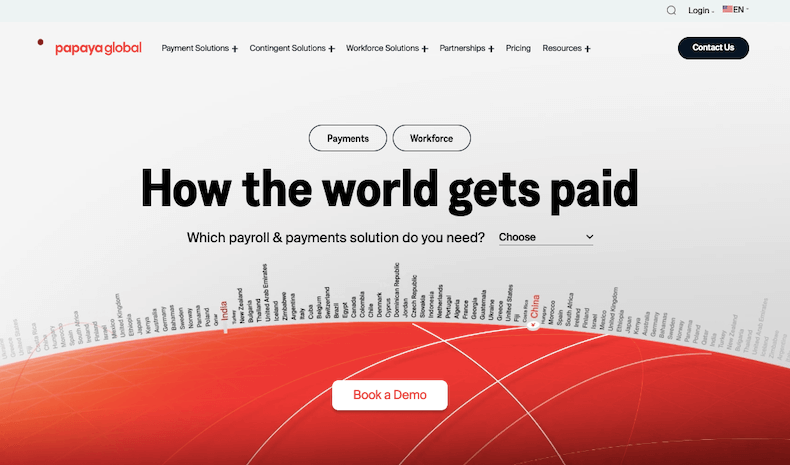
Papaya Global Review
Papaya Global is best for managing global employment, payroll, and compliance through a unified Employer of Record platform.

Papaya Global Company Profile

Co Name: Papaya Global Ltd.
HQ: New York, New York, United States
Est Year: 2016
Co Size: 501-1000 employees

Deel Vs Papaya Global: Quick Comparison

This quick comparison highlights the key differences between Deel Vs Papaya Global, including country coverage, onboarding speed, pricing transparency, and the types of companies each platform is best suited for.
Deel Logo

Deel

Entity Model
Hybrid
Onboarding Speed
Fast
Best For
Mid-market
Payroll & Compliance
Handles complex cases
Global Coverage Strength
Broad, shallow
Country Coverage
150 Countries
Benefits Quality
Competitive
Pricing Transparency
Public pricing
Support Model
Shared support
Best Use Case
Long-term expansion
Papaya Global Logo

Papaya Global

Entity Model
Onboarding Speed
Best For
Payroll & Compliance
Global Coverage Strength
Country Coverage
160 Countries
Benefits Quality
Pricing Transparency
Support Model
Best Use Case

Deel Vs Papaya Global: Community Review Summary

Deel Vs Papaya Global We have checked community ratings for both the products to give you an idea about how both the platform are performing with real user data.

Deel: Community Rating

Avg 4.8 (16,900 Ratings Analyzed)
g2
4.8/5
capterra-logo-icon
4.8/5
Trustpilot
4.8/5

Papaya Global: Community Rating

Avg 4.2 (125 Ratings Analyzed)
g2
4.5
capterra-logo-icon
4.4
Trustpilot
2.9

Deel Vs Papaya Global: Community Sentiment & Ratings

We have looked at all the community reviews of Deel Vs Papaya Global and generated these ratings on various parameters.
Overall Rating & Sentiments
Based on 16,900 user reviews.
4.8
User Sentiments
Positive 83%
Neutral 9%
Negative 8%

Ratings of Deel

Ease of Use
Reviewers consistently highlight an intuitive dashboard and straightforward global hiring/onboarding workflows.
4.7/5
Features & Functionality
Strong global payroll, contractor/EOR management, contracts, compliance and multi-currency payments praised across platforms.
4.8/5
Compliance & Risk Management
Users note reliable compliance handling and legal contract support in 150+ countries.
4.7/5
Payroll Accuracy & Timeliness
Most reviews report timely payments and clear transfer tracking, with occasional web interface delays noted.
4.6/5
Customer Support Quality
Trustpilot and Capterra feedback often praises responsive support, though some variability appears.
4.5/5
Pricing & Value
High value for global use, but costs (e.g., Deel Advance interest) and some inflexibilities are mentioned.
4.2/5
Onboarding Speed & Experience
Many users describe smooth onboarding and quick setup of contracts/payouts.
4.7/5
Platform Stability & Integrations
Generally stable and integrates well; a minority notes occasional slowness in parts of platform.
4.5/5
Benefits Administration Quality
Integrated benefits are appreciated where used, though not as prominent in every review set.
4.3/5
Global Coverage & Scalability
Exceptional global reach and support for multi-country payroll/EOR use cases.
4.9/5
Overall Rating & Sentiments
Based on 125 user reviews.
4.2
User Sentiments
Positive 72%
Neutral 8%
Negative 20%

Ratings of Papaya Global

Ease of Use
Interface is structured and professional but requires training to navigate efficiently
3.8/5
Features & Functionality
Very strong global payroll engine with centralized reporting; less focused on broader HR workflows.
4.4/5
Compliance & Risk Management
Compliance is a clear strength, especially for multi-country payroll and statutory reporting.
4.7/5
Payroll Accuracy & Timeliness
Payroll accuracy is highly rated once configured; early-stage setup errors appear in some reviews.
4.6/5
Customer Support Quality
Mixed sentiment, dedicated payroll experts are praised, but response times can vary by region.
4.0/5
Pricing & Value
Viewed as premium-priced; value is strongest for complex, multi-entity global payroll needs.
3.9/5
Onboarding Speed & Experience
Onboarding is thorough but often described as slow, especially during multi-country rollouts.
3.8/5
Platform Stability & Integrations
Platform is stable and integrates well with major HRIS tools, though customization can be rigid.
4.2/5
Benefits Administration Quality
Solid benefits handling through local partners; depth varies by country.
4.3/5
Global Coverage & Scalability
Excellent global reach and scalability, particularly for enterprises operating in many jurisdictions.
4.8/5

Deel Vs Papaya Global: Pros & Cons

Deel Pros & Cons

Pros of Deel

Entity-Free Hiring
Hire full-time global employees legally without opening a local subsidiary in each hiring market
Contractor Payment Automation
Automates invoices and payouts for international contractors with built-in tax documentation management
Localized Contract Generation
Generates compliant employment agreements aligned with country-specific labor law frameworks
Multi-Currency Payroll Engine
Supports payroll processing across currencies while managing statutory deductions automatically
Rapid Market Entry
Enables companies to onboard employees quickly in established hiring destinations worldwide
Conversion Workflows
Allows smooth transition from contractor status to full-time employment within the same platform

Cons of Deel

High Per-Employee Cost
Pricing can escalate quickly when scaling distributed teams across multiple countries
Support Queue Delays
Payroll period support response times may lag during high-volume processing windows
Uneven Benefits Access
Employee benefit availability differs significantly between hiring jurisdictions
Partner Network Limits
Onboarding timelines may extend in less frequently supported hiring regions

Papaya Global Pros & Cons

Pros of Papaya Global

Global Payroll Coverage
Supports payroll and employment compliance across more than 160 countries with localized regulatory handling.
Compliance Expertise
Strong compliance infrastructure helps HR teams manage tax rules, statutory benefits, and labor regulations globally.
Unified Workforce Platform
Combines EOR, payroll, and contractor management in a single platform instead of fragmented tools.
Automated Payroll Workflows
Payroll calculations, tax deductions, and reporting processes are heavily automated for multi-country payroll operations.
Global Hiring Infrastructure
Makes it possible to hire international employees without establishing local legal entities.
Detailed Payroll Reporting
Finance teams benefit from consolidated payroll reporting across countries and currencies.
Contractor Payment Tools
Built-in contractor payment system simplifies paying international freelancers in multiple currencies.

Cons of Papaya Global

Premium Pricing Structure
Pricing is higher than many EOR competitors, particularly for companies hiring in only a few countries.
Implementation Time
Initial setup and payroll configuration can take longer than expected for complex global payroll environments.
Support Response Delays
Some reviewers report slower response times from support during critical payroll processing periods.
Learning Curve For Admins
Payroll configuration and reporting features require time for HR teams unfamiliar with global payroll systems.
Deel Logo

Deel

Avg 4.8 (16,900 Ratings Analyzed)
Papaya Global Logo

Papaya Global

Avg 4.2 (125 Ratings Analyzed)

Deel Vs Papaya Global Comparison Summary

Most companies don’t plan to use an Employer of Record. It usually starts with one hire in another country, then a few more, and suddenly you’re dealing with local labor laws, tax registrations, payroll filings, and benefits you don’t fully understand.

That’s where EOR platforms come in. They let you hire internationally without setting up entities in every country.

Deel and Papaya Global are often compared because they both solve this problem well. But once you look beyond the surface, they reflect different ways of running global operations.

At first glance, they seem similar. Once you start using them, the differences become more obvious.

About Deel

Deel built its reputation by solving contractor payments across borders. That origin still shows in how the platform works.

Over time, it expanded into full EOR services, global payroll, and compliance management. Even with that expansion, the product remains focused on speed and usability. You can onboard employees quickly, generate compliant contracts without legal bottlenecks, and start running payroll without much setup.

This is why Deel shows up frequently in startups, remote-first companies, and fast-growing teams. It works well when hiring is happening across multiple countries at the same time.

Operationally, it is straightforward. Most workflows are self-service. HR teams don’t need heavy implementation or external consultants to get started.

In the market, Deel is often seen as the practical option. Not because it does everything, but because it removes friction at the point where teams feel it most.

Deel EOR Review

About Papaya Global

Papaya Global approaches the problem from a different angle. Its foundation is global payroll infrastructure rather than contractor management.

The platform is designed to bring payroll, compliance, and workforce data into one system across countries. EOR is part of the offering, but it sits within a broader operational layer.

This difference shows up in who evaluates it. Papaya Global is often assessed by finance and operations teams, not just HR. Companies using it usually already have some international presence and want more control over how things are managed.

Where Papaya stands out is consistency. Payroll processes, reporting, and compliance tracking are more standardized across regions.

It feels less like a tool you start using immediately and more like a system you set up and run your operations through.

Papaya Global Review

Deel vs Papaya Global: At a Glance

Deel is a better fit for:

✓ Expanding globally on a tight budget
✓ Managing a large international contractor base
✓ Hiring in emerging markets
✓ Teams that want a fast, lightweight, self-serve EOR platform

Papaya Global is a better fit for:

✓ Building a remote-first team with stronger benefits structures
✓ Competing for talent on employee experience and consistency
✓ First-time global hiring with more structured guidance
✓ Companies that want centralized payroll visibility and control

Deel vs Papaya Global: Editor’s Note

In our experience, the real shift does not happen when a company chooses a platform. It happens a few months later.

Early on, most teams just want to hire quickly and stay compliant without slowing down. Deel fits naturally in that phase.

Once payroll starts running across several countries, priorities change. Finance teams want consistency. Leadership wants clearer reporting. Processes need to hold up under scrutiny.

That is usually when companies start leaning toward platforms like Papaya Global.

Deel vs Papaya Global: Feature-by-Feature Breakdown

EOR Country Coverage

Both platforms support hiring in well over 100 countries, so coverage alone rarely drives the decision.

The difference shows up when hiring in less common markets. Deel tends to move faster in newer or emerging regions, which helps teams that are experimenting with global hiring.

Papaya Global also offers broad coverage, but onboarding can feel more methodical depending on the country and requirements.

Platform Type

Deel behaves like a tool teams use every day. You log in, onboard people, issue contracts, and run payments without much overhead.

Papaya Global behaves more like a system that sits underneath your operations. It connects payroll, compliance, and workforce data into a single layer.

You are not just using it. You are structuring processes around it.

Onboarding & Compliance

Most teams notice the difference here first.

With Deel, onboarding is quick and largely self-directed. Contracts are generated fast, and compliance steps happen in the background.

Papaya Global takes a more guided approach. There is more validation upfront, especially around employment terms and local requirements.

It takes a bit longer, but it reduces surprises later.

Payroll & Benefits

This is where the gap becomes clearer.

Deel handles payroll reliably across countries and works well for distributed teams that need flexibility. Benefits are available, though they can vary depending on location.

Papaya Global puts more emphasis on how payroll is structured and reported. Processes are more standardized, and benefits administration tends to be more consistent across regions.

This is often where finance teams start pushing for a more centralized approach.

Legal, IP & Security

Both platforms cover the essentials such as localized contracts, IP protection, and compliance requirements.

Papaya places more emphasis on documentation and audit readiness. It is designed for environments where compliance needs to stand up to internal or external review.

Deel covers the same areas but keeps the experience simpler and easier to navigate.

Platform UX & Integrations

Deel is easier to adopt. The interface is clean, and most teams can get started without training.

Papaya Global has improved its usability, but it still feels like a platform that requires setup and alignment across teams.

Smaller teams tend to prefer Deel quickly. Larger organizations are more willing to invest time in Papaya if it gives them better control.

Support Model

Papaya Global offers a more structured support model, often with dedicated account management and guided onboarding.

Deel provides responsive support as well, but the platform is clearly designed for self-service.

The difference becomes more noticeable when dealing with complex, multi-country setups.

Pricing Structure

Deel’s pricing is generally easier to understand and more predictable, especially for startups and contractor-heavy teams.

Papaya Global’s pricing can vary depending on how payroll, EOR, and additional services are bundled together.

At smaller scale, the difference may not stand out. As teams grow across countries, it becomes more visible.

Scalability

Both platforms scale, but in different ways.

Deel supports teams that are hiring quickly across multiple regions and need flexibility.

Papaya Global becomes more useful when companies want to standardize payroll, reporting, and compliance across a growing international workforce.

It depends on what kind of complexity you are dealing with.

Deel vs Papaya Global: EOR Capabilities Side-by-Side

The table below focuses on Employer of Record capabilities, where practical differences usually appear.

EOR FeatureDeelPapaya Global
EOR Country Coverage150+ countries with strong emerging market reach160+ countries with structured global coverage
Entity & Partner ModelMix of owned entities and partners, optimized for speedPartner-driven model with centralized oversight
Localized Employment ContractsFast, automated contract generationMore customized, compliance-driven contracts
Compliance ManagementBuilt-in and simplified for ease of useDetailed tracking with stronger reporting
Payroll ExecutionEfficient and flexibleStandardized and process-driven
Tax Withholding & FilingsManaged automaticallyManaged with deeper visibility and reporting
Statutory Benefits AdministrationFlexible, varies by countryMore consistent and structured across regions
Optional / Supplemental BenefitsAvailable but less standardizedStronger global benefits structuring
Onboarding ModelFast, self-serviceGuided and controlled onboarding
Offboarding & TerminationsStreamlined workflowsMore structured and compliance-focused
IP Assignment & ConfidentialityStandard protection built into contractsStrong documentation and audit focus
Worker Types SupportedEmployees and contractors with strong contractor supportEmployees and contractors with unified payroll layer
Statutory Leave TrackingBasic tracking capabilitiesMore structured leave management
Multi-Currency PayrollFlexible handlingCentralized and standardized
Expense & Reimbursement HandlingSimple workflowsIntegrated into payroll systems
Equity & Variable Pay HandlingFlexible supportMore structured handling
Audit & Documentation SupportStandard documentationStrong audit readiness
Support StyleSelf-service with responsive helpHigh-touch, account-managed
Best EOR Use CaseFast global hiring and contractor managementStructured global workforce and payroll control

The takeaway is simple. Deel is easier to move with. Papaya Global gives more control once operations become more complex.

Deel Vs Papaya Global: Final Recommendation

Choose Deel if you:

• Need to hire quickly across multiple countries without delays
• Manage a large contractor workforce alongside employees
• Want a platform your team can use without formal implementation
• Prefer flexibility in how you run global hiring

Choose Papaya Global if you:

• Need centralized payroll visibility across multiple countries
• Operate with strong finance or compliance oversight
• Want structured onboarding and standardized processes
• Are scaling a larger international workforce with reporting needs

Verdict

Both platforms solve the same problem. They allow companies to hire globally without setting up local entities.

Deel works well for teams that prioritize speed and flexibility. Papaya Global becomes more valuable when operations grow more complex and require consistency across regions.

The better choice depends on how your organization prefers to operate today and how that will change as you scale.


Deel Vs Papaya Global Comparison FAQs

Both Deel and Papaya Global support hiring in over 150 countries. The difference is not in coverage but in how hiring is executed within those countries.
Deel is often more cost-effective for startups and contractor-heavy teams because of its simpler pricing. Papaya Global’s pricing can be more layered depending on the services used.
Deel is usually a better fit for startups due to its ease of use and faster onboarding. Papaya Global is more suitable for companies with more operational complexity.
Yes, both platforms support contractor management. Deel has a stronger reputation in this area, while Papaya includes it within a broader workforce system.
Both platforms generate localized contracts that comply with local labor laws. Deel focuses on speed, while Papaya Global emphasizes structure and validation.
Papaya Global is stronger when it comes to payroll standardization and reporting across multiple countries. Deel handles payroll effectively but is less focused on centralization.
Onboarding is typically faster with Deel because of its self-service approach. Papaya Global takes more time but provides more oversight.
Both platforms provide strong compliance support. Papaya Global places more emphasis on documentation and audit readiness, which can matter for larger organizations.

Our Comparison Methodology

Our side-by-side comparisons reflect how companies actually evaluate Employer of Record providers before making a hiring or compliance decision.

We compare platforms across a small set of high-impact factors:

  • Employment & compliance model: How each provider delivers EOR services, including entity structure, compliance responsibility, and risk ownership.
  • Country coverage quality: Depth of in-country support, not just the number of countries listed.
  • Operational execution: Hiring, payroll accuracy, benefits handling, and offboarding reliability.
  • Pricing structure: Cost transparency, billing clarity, and long-term predictability.
  • Platform & support maturity: Day-to-day usability, scalability, and service reliability.
  • Customer experience signals: Consistent patterns from third-party user feedback.

Outcomes are fit-based and highlight trade-offs depending on hiring needs, regions, and risk tolerance. No platform is treated as universally superior.

Comparisons are written independently and are not influenced by commercial relationships.

Manjuri-Dutta
Article By: Manjuri Dutta

Manjuri Dutta is the co-founder and Content Editor at Employer Records, a platform specialized in discovering best Employer-of-Record services for global hiring. She brings a thoughtful and expert voice to articles designed to inform HR leaders, practitioners, and tech buyers alike.

Related Comparisons

Pebl Vs Rippling

Pebl Vs Rippling

Deel Vs Oyster HR

Deel Vs Oyster HR

Multiplier Vs Hire with Columbus

Multiplier Vs Hire with Columbus

Multiplier Vs Oyster HR

Multiplier Vs Oyster HR

RemoFirst Vs Oyster HR

RemoFirst Vs Oyster HR

Rippling Vs Remote

Rippling Vs Remote

RemoFirst Vs Remote

RemoFirst Vs Remote

Oyster Vs Remote

Oyster HR Vs Remote

This website uses cookies to enhance user experience and to analyze performance and traffic on our website. By continuing to browse this site you are agreeing to our use of cookies.